
Os Justi Press
The Servile State
The Servile State
Couldn't load pickup availability
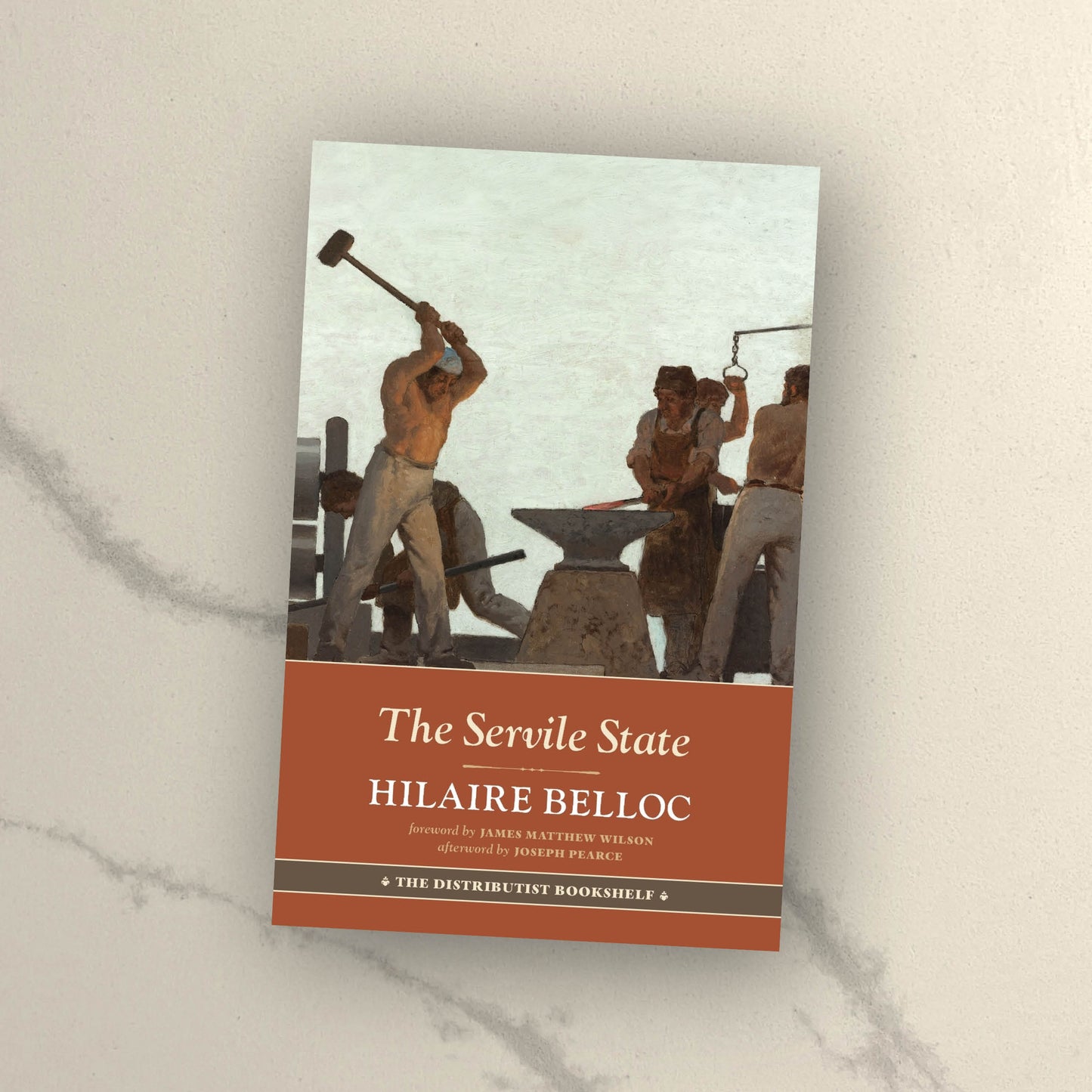
Part political philosophy, part sociology, Belloc's The Servile State endeavors to describe the modern economic circumstances of England and the West as they stood in the first part of the twentieth century. Writing after Tocqueville and Marx, and indebted to their practice of viewing social and economic life as expressive of more fundamental intellectual forms, Belloc wishes to explain the increasing discontent of modern "capitalist" societies. "Industrial society as we know it will tend towards the re-establishment of slavery," he argues, drawing upon the emergent social doctrine of the Catholic Church. Pope Leo XIII's Rerum Novarum (1891) was the first great document in the Church's summons to a "third way" that eschewed the brutality of industrial capitalism and the unnatural rationalism of socialist collectivism, both of them leading to impoverishments of various kinds. Though Belloc's mode of argument was about social forms and his vocabulary mostly secular, the power of his argument emerges from the Christian vision of the dignity conferred by Christ's incarnation on the human person, which inclines us to see slavery as an evil, rather than an inevitable byproduct of "progress." The articulation of this "third way" by Hilaire Belloc and his close collaborators G.K. Chesterton and Fr. Vincent McNabb would come to be known as Distributism. The Servile State is a much-admired classic of social theory, one of Distributism's first and most influential articulations.